A belt of copper deposits lies along the western slopes of the Whitehorse valley. Surface ores were discovered by prospectors and mined between 1900 and 1919. Development of modern geophysical and geochemical exploration techniques that could detect buried deposits led to a second period of mineral production between 1967 and 1982. The total value of copper, silver, and gold mined near Whitehorse is almost 500 million dollars. Future exploration using modern techniques may lead to new discoveries and renewed mining.
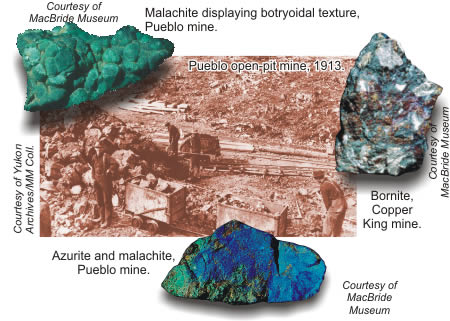
Blue and green copper ore was hand-picked from blasted rock and shipped to a smelter on Vancouver Island.
Reclaiming Old Wastes
All mines close when the ore minerals are too sparse to be mined at a profit. Mine buildings are removed, mine shafts are blocked, and the mine site is reclaimed to the standards of government regulatory agencies.
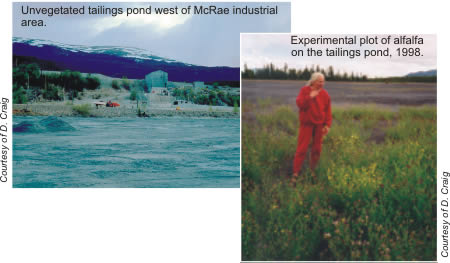
One problematic issue is reclamation of mine tailings. Plants have not revegetated the sandy tailings that cover a ten hectare area west of McRae industrial area near the site of the old Little Chief mine. The sandy tailings retain little moisture, while abundant calcite (a mineral made of calcium carbonate) makes the soil too alkaline for plants. The loose tailings, though not toxic to humans, animals, or plants, are blown about by strong winds. However, a pilot study has shown that, when mixed with compost, the tailings support healthy vegetation.
Q. Acid rock drainage?
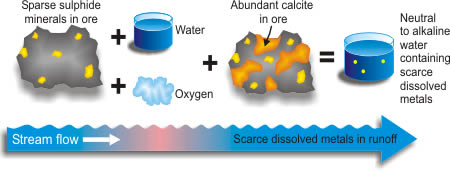
Many mining operations must deal with the problem of acid rock drainage, which occurs when rock rich in sulphide minerals (commonly pyrite) reacts with water and atmospheric oxygen. Under these conditions, sulphide minerals dissolve, releasing metals and producing acidic waters. Acidic waters can transport high concentrations of metals, which can harm aquatic plants and animals.
A. Not here in Whitehorse Copper Belt!
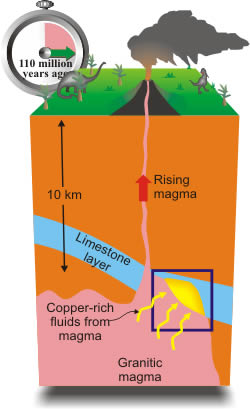
Birth of An Orebody: 110 million years ago and 10 km down...
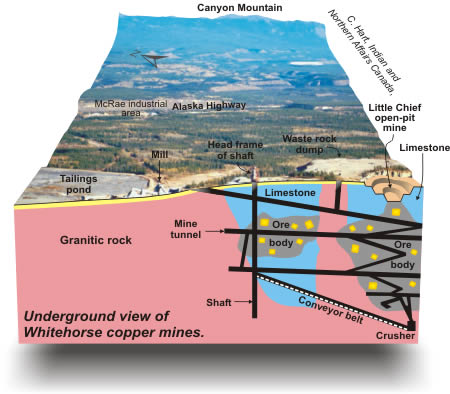
The copper deposits of the Whitehorse Copper Belt occur at the boundary between granite and limestone.
Why is this so? Geologists explain it this way. The copper deposits formed about 110 million years ago, during the age of dinosaurs. Granitic magma moved upward through deeply buried crustal rocks, including layers of limestone. Copper-bearing fluids released from the crystallizing granite reacted vigorously with limestone, causing copper minerals to precipitate.
Subsequent erosion of about 10 km of overlying rocks has brought these copper deposits near the surface, where they can be mined.