CGEN Archive

Geoscape Canada

English  |  Francais

CGEN's Home Page
  • Home
  • CGEN Minutes
  • EarthLinks
  • EdGEO
    • Bringing Earth Science to Life
    • Putting the Earth into Science
  • FBY
    • FBY-Chapter Previews
    • FBY-Sample Lesson
    • QMA-Apercus des chapitres
  • Geoscape
    • Geoscape Canada >
      • Calgary
      • Fort Fraser
      • Montreal
      • Nanaimo
      • Northwest Territories
      • Ottawa-Gatineau
      • Québec
      • Saskatchewan-North
      • Saskatchewan-South
      • Toronto
      • Vancouver
      • Victoria
      • Whitehorse
    • Géopanorama du Canada
    • Geoscape Posters
    • Geotours
    • Waterscapes >
      • Bowen Island
      • Bow River Basin
      • Gulf Islands
      • Okanagan Basin
  • Geovistas
  • Key Publications
    • Wat On Earth
  • OGGP
  • Contact Us
Geoscape - Canada
  • Home
  • What do the map patterns mean?
  • Earth Materials 
  • From Coast to Coast
  • Credits & Citation
  • Poster Downloads

Geoscape - Canada

Geoscape Canada Poster
Download Poster [PDF, 19.46 Mb]

Picture
larger image
[JPEG, 1.3 Mb, 3400 X 2040]

A Map of Canada's Earth Materials

Picture
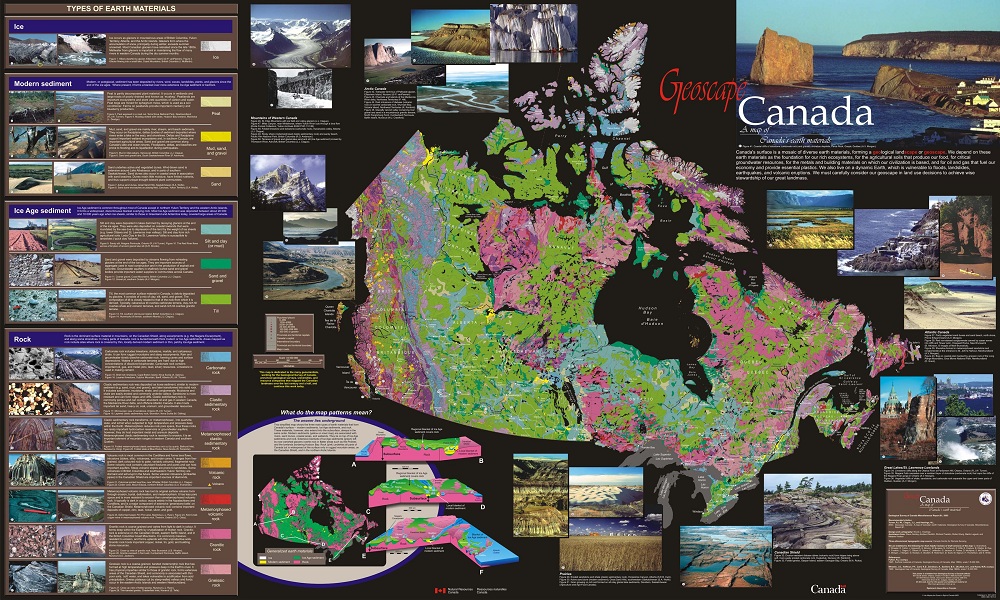
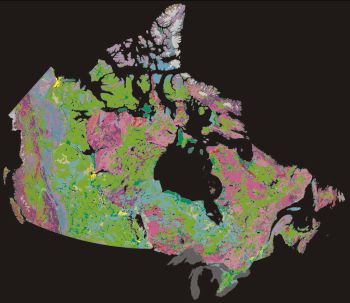
Canada's surface is a mosaic of diverse earth materials, forming a geological landscape or geoscape. We depend on these earth materials as the foundation for our rich ecosystems, for the agricultural soils that produce our food, for critical groundwater resources, for the metals and building materials on which our civilization is based, and for oil and gas that fuel our economy and provide essential plastics.

We also live on a dynamic Earth, which is vulnerable to floods, landslides, earthquakes, and volcanic eruptions. We must carefully consider our geoscape in land use decisions to achieve wise stewardship of our great landmass.
Géopanorama du Canada
Geoscapes:
  • Canada
  • Calgary
  • Fort Fraser
  • Montreal
  • Nanaimo
  • Northwest Territories
  • Ottawa-Gatineau
  • Québec
  • Saskatchewan - North
  • Saskatchewan - South
  • Toronto
  • Vancouver
  • Victoria
  • Whitehorse

Other Geoscapes:
  • ​​Edmonton (pdf file)
  • ​Grand River...
  • article / presentation
  • Nunavut (Geoscan links)
    English​ / French 
    ​

Map Legend

Picture
Picture
Picture
Picture

Earth Materials

Ice

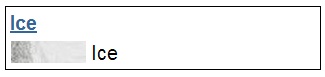
Ice occurs as glaciers in mountainous areas of British Columbia, Yukon Territory, Alberta, and the Arctic Islands. Glaciers form where the accumulation of snow, principally during winter, exceeds summer snowmelt. Most Canadian glaciers have retreated since the late 1800s. Meltwater from glaciers is important in maintaining the flow of many rivers in western Canada during the dry summer months.

Modern Sediment

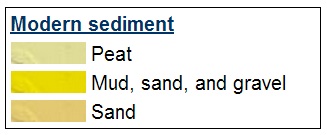
Modern sediment, or postglacial sediment, has been deposited by rivers, wind, waves, landslides, plants, and glaciers since the end of the ice ages. Where present, it forms a blanket over more extensive Ice Age sediment or bedrock.

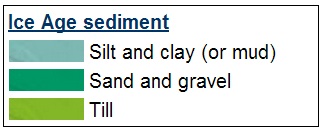
Ice Age Sediment

Ice Age sediment is common throughout most of Canada except in northern Yukon Territory and the western Arctic Islands. It forms a widespread, discontinuous blanket overlying rock. Most Ice Age sediment was deposited between about 20 000 and 10 000 years ago when ice sheets, similar to those in Greenland and Antarctica today, covered large areas of Canada.

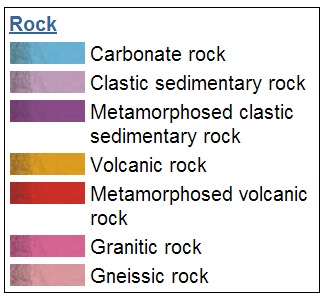
Rock

Rock is the dominant surface material in mountains, on the Canadian Shield, along escarpments (e.g. the Niagara Escarpment), and along some shorelines. In many parts of Canada, rock is buried beneath thick modern or Ice Age sediments. Areas mapped as rock include sites where rock is covered by thin, locally derived modern sediment or thin, patchy Ice Age sediment.
More information on Earth materials...
More information on map patterns...
Copyright CGEN 2014-2021
​ Quick Links to Earth Sciences Canada sites
​Earthlinks | WHERE Challenge | Careers in Earth Science |  Four Billion Years and Counting | IYPE | CFES | CGEN | IUGS | GeoVistas | OGGP