CGEN Archive

Waterscape Canada

CGEN's Home Page
  • Home
  • CGEN Minutes
  • EarthLinks
  • EdGEO
    • Bringing Earth Science to Life
    • Putting the Earth into Science
  • FBY
    • FBY-Chapter Previews
    • FBY-Sample Lesson
    • QMA-Apercus des chapitres
  • Geoscape
    • Geoscape Canada >
      • Calgary
      • Fort Fraser
      • Montreal
      • Nanaimo
      • Northwest Territories
      • Ottawa-Gatineau
      • Québec
      • Saskatchewan-North
      • Saskatchewan-South
      • Toronto
      • Vancouver
      • Victoria
      • Whitehorse
    • Géopanorama du Canada
    • Geoscape Posters
    • Geotours
    • Waterscapes >
      • Bowen Island
      • Bow River Basin
      • Gulf Islands
      • Okanagan Basin
  • Geovistas
  • Key Publications
    • Wat On Earth
  • OGGP
  • Contact Us

Waterscape - Bowen Island

Hydropanoramas
  • Home
  • How we use it.
  • Water shortages?
  • How we get it.
  • The Clean Water Factory
  • Water Stored Underground
  • Reducing Risks
  • Living with summer drought.
  • Credits & Citation
  • Poster Downloads
Reducing Risks: Protecting Water Quality

Protecting our clean water factory
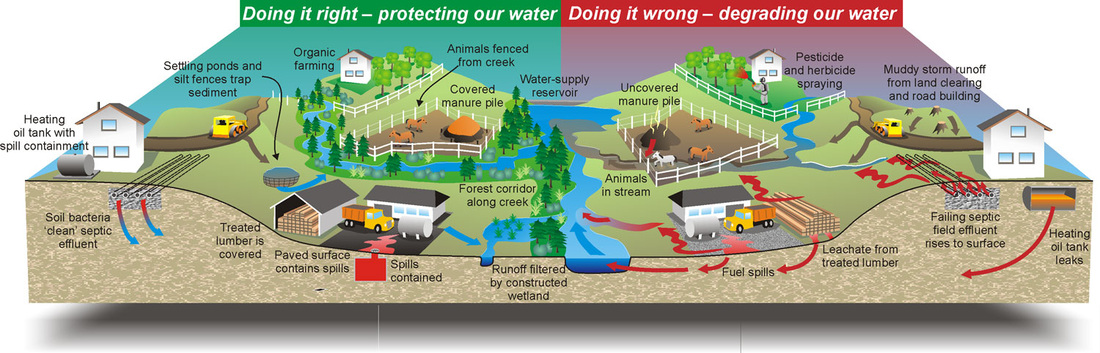
We are a small island with a growing population. We are blessed with extensive forest lands, our clean water factory. Protecting this green infrastructure is vital. In developed areas, we need to commit to 'best practices' to minimize the risk of contamination.
Picture
Doing it right - protecting our water
Doing it wrong - degrading our water
Picture
So what's the problem?
We can learn from past mistakes. Turbidity is a problem for many water systems. Its source is road construction, land clearing, and poor storm-water management. Failed septic systems and poor livestock practices can lead to bacterial contamination. Leaks from buried fuel tanks, fuel spills, and illegal burn piles have locally contaminated groundwater. We should also be concerned about risks from herbicides and pesticides.
Your septic field: a friend that needs maintenance
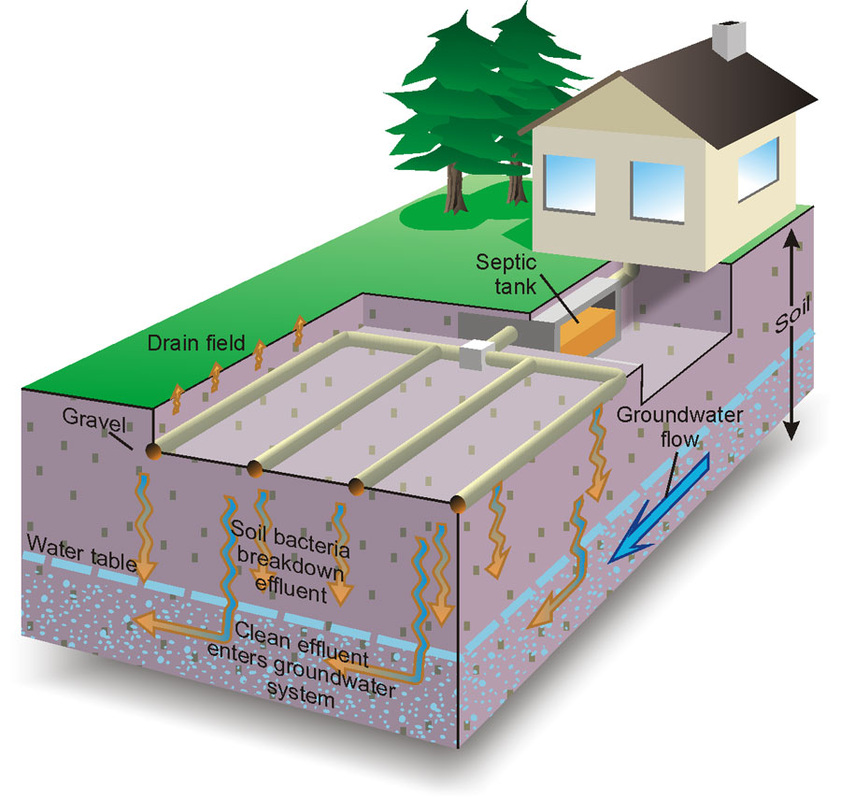
Septic fields are safe, economical, low-maintenance facilities for sewage disposal on Bowen Island, but they do need an annual check. Waste water flows into a tank where solids are trapped and bacteria break down wastes. Liquids flow into the drain field and percolate into the soil. Soil bacteria purify the effluent, producing clean water that becomes groundwater.
Picture
When things go wrong
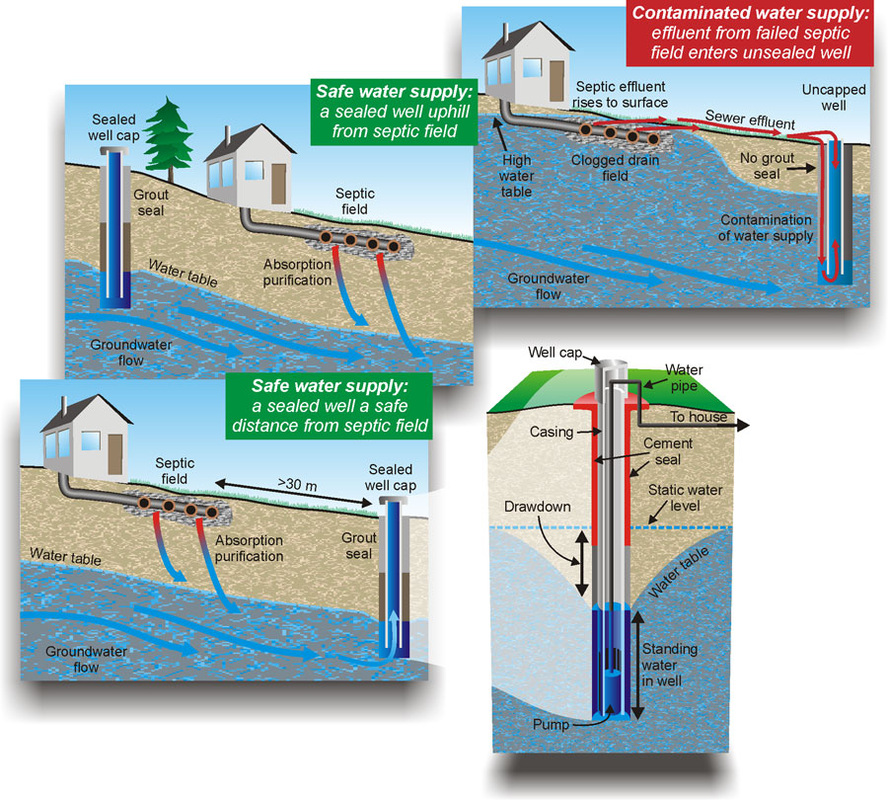
Septic fields fail when drain fields clog and septic effluent rises to the surface and flows overland, contaminating wells and streams. Wells downhill from a failing septic field are only protected if they are capped and grouted properly. Otherwise, septic effluent can enter a well from the surface.
Picture
Is your well protected?
Trouble occurs when contaminated surface water leaks down into wells. To prevent this, properly sealed wells have grout injected between the well casing (steel pipe in the upper well) and the well wall, and a cap is placed on the top of the casing; however, many wells are not properly sealed. Is yours?
​
Water Treatment
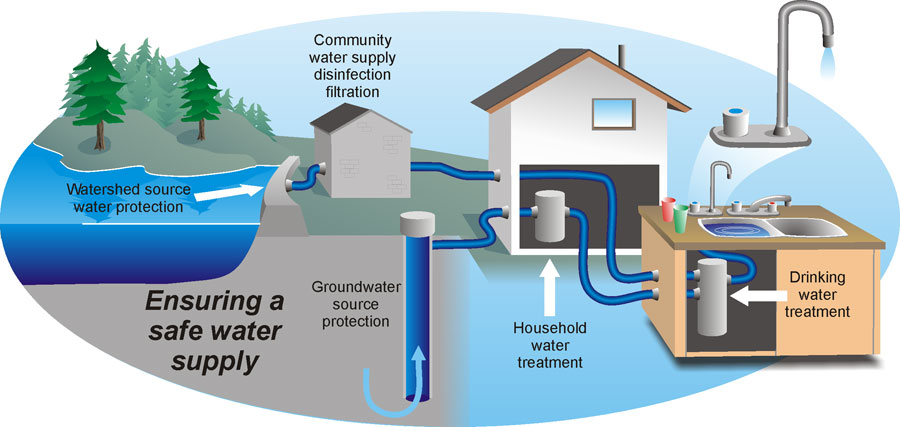
Protecting water quality in source areas is our first line of defense. Beyond that, community water systems use disinfection (chlorination, ultraviolet radiation) to kill bacteria, viruses and Giardia cysts, and filtration to remove turbidity that interferes with the sterilization process. Some homeowners on wells treat water to remove dissolved minerals such as calcium (hardness), iron, manganese, or arsenic.
Picture
Waterscapes:
  • Bowen Island 
  • Bow River Basin
  • Gulf Islands
  • Okanagan Basin ​
Copyright CGEN 2014-2021
​ Quick Links to Earth Sciences Canada sites
​Earthlinks | WHERE Challenge | Careers in Earth Science |  Four Billion Years and Counting | IYPE | CFES | CGEN | IUGS | GeoVistas | OGGP