CGEN Archive

Waterscape Canada

CGEN's Home Page
  • Home
  • CGEN Minutes
  • EarthLinks
  • EdGEO
    • Bringing Earth Science to Life
    • Putting the Earth into Science
  • FBY
    • FBY-Chapter Previews
    • FBY-Sample Lesson
    • QMA-Apercus des chapitres
  • Geoscape
    • Geoscape Canada >
      • Calgary
      • Fort Fraser
      • Montreal
      • Nanaimo
      • Northwest Territories
      • Ottawa-Gatineau
      • Québec
      • Saskatchewan-North
      • Saskatchewan-South
      • Toronto
      • Vancouver
      • Victoria
      • Whitehorse
    • Géopanorama du Canada
    • Geoscape Posters
    • Geotours
    • Waterscapes >
      • Bowen Island
      • Bow River Basin
      • Gulf Islands
      • Okanagan Basin
  • Geovistas
  • Key Publications
    • Wat On Earth
  • OGGP
  • Contact Us

Waterscape - Okanagan Basin

Hydropanoramas
  • Home
  • From Highlands
  • Our Water Cycle
  • Our Lakes
  • Groundwater
  • Our Changing Climate
  • Protecting Water Needs
  • We Need Healthy Streams
  • Irrigation
  • Wise Water Use Indoors
  • Wise Water Use Outdoors
  • Sharing Our Waters
  • Credits & Citation
  • Poster Downloads

Protecting Nature's Water Needs

Picture


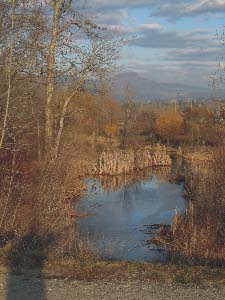
A remnant of the once extensive wetlands along Mission Creek in Kelowna.
(R.J.W. Turner, GSC 2006-156)
Nature was here first
Okanagan Basin ecosystems range from highland forests to semiarid grasslands. What treasures! These plants and animals are the oldest water-users in the valley, and remain important and legitimate water-users today. A major reason for us to conserve water is to ensure that nature has enough for its own needs.
Picture

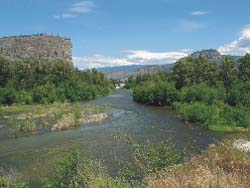
Trout Creek at Summerland is Okanagan's second largest stream. Low water flows in summer reflect the challenge of meeting water needs for both humans and fish.
(R.J.W. Turner, GSC 2006-157)
Down in the valley, competition between nature and humans is fierce
We use valley bottoms in the Okanagan Basin for agriculture, recreation, towns, and roads. Nature has been squeezed out of many areas. Wetlands have been drained and filled, and many streams and rivers channelled and dyked, to create land for our agriculture and towns. Remaining wild spaces are precious. Loss of habitat has put at risk many species, such as the peregrine falcon, yellow-breasted chat, and sockeye salmon.
Picture
Cactus flowers
(C. Klym)

Picture
Picture


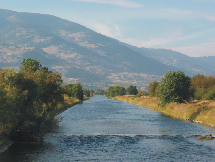
​Dyked and channellized Okanagan River near Oliver

(R.J.W. Turner, GSC 2006-158)

​Sockeye salmon spawn in the only remaining natural channel of the Okanagan River at MacIntyre Bluff, near Oliver.
(R.J.W. Turner, GSC 2006-159)
Water for fish
Fish species in our lakes and streams need clean water year-around in which to live. Sockeye salmon spawn in the Okanagan River and rear in Osoyoos Lake. These salmon are one of the few remaining natural runs in the entire Columbia River system. Shorelines of Okanagan Lake and streams are critical spawning areas for kokanee.
Picture
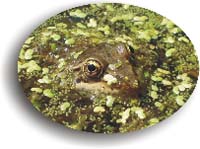
Frog in wetland
(C. Klym)

Picture


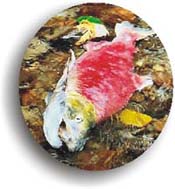
Sockeye salmon die after spawning.

(J. Heighton, Pêches et Océans Canada)
Waterscapes:
  • Bowen Island 
  • Bow River Basin
  • Gulf Islands
  • Okanagan Basin ​
Copyright CGEN 2014-2021
​ Quick Links to Earth Sciences Canada sites
​Earthlinks | WHERE Challenge | Careers in Earth Science |  Four Billion Years and Counting | IYPE | CFES | CGEN | IUGS | GeoVistas | OGGP